Guidelines for delivery areas in Berlin

The City of Berlin has developed standardised guidelines to ensure the efficient and safe allocation of delivery and loading zones across the city. Urban logistics depends on the availability of well-placed, functional space. These guidelines aim to reduce street-level conflicts, improve logistics efficiency, and create safer urban transport environments. Developed collaboratively between the Senate Department and Berlin’s districts, the guidelines were being developed from 2022 to 2025.
Who it’s for

Image credit: SenMVKU/Ralf Rühmeier
The guidelines primarily support Berlin’s districts in designing and arranging more standardised delivery areas. They are also intended to make the topic more accessible and understandable to the general public.
Key stakeholders involved: Senate Department for Urban Mobility, Transport, Climate Action and the Environment; Berlin Districts; Berlin Urban Logistics Exchange Platform participants.
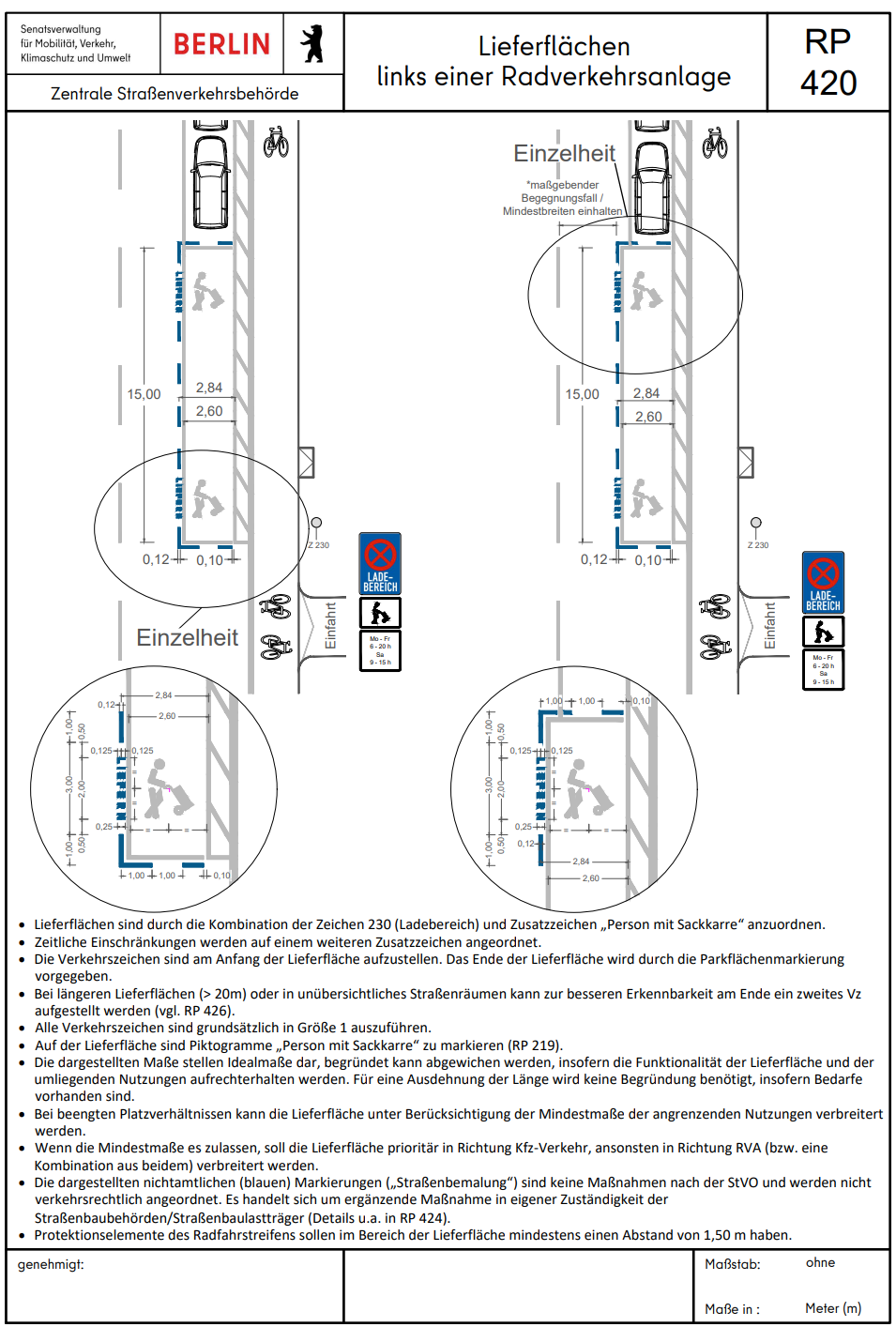
Image credit: Senatsverwaltung für Mobilität, Verkehr, Klimaschutz und Umwelt (2025)
Impact in numbers
- City-wide framework for delivery zone design
- Milestone in harmonising logistics infrastructure
- Supports both new developments and retrofits of existing street layouts
- Balances the needs of businesses, delivery drivers, and all road users
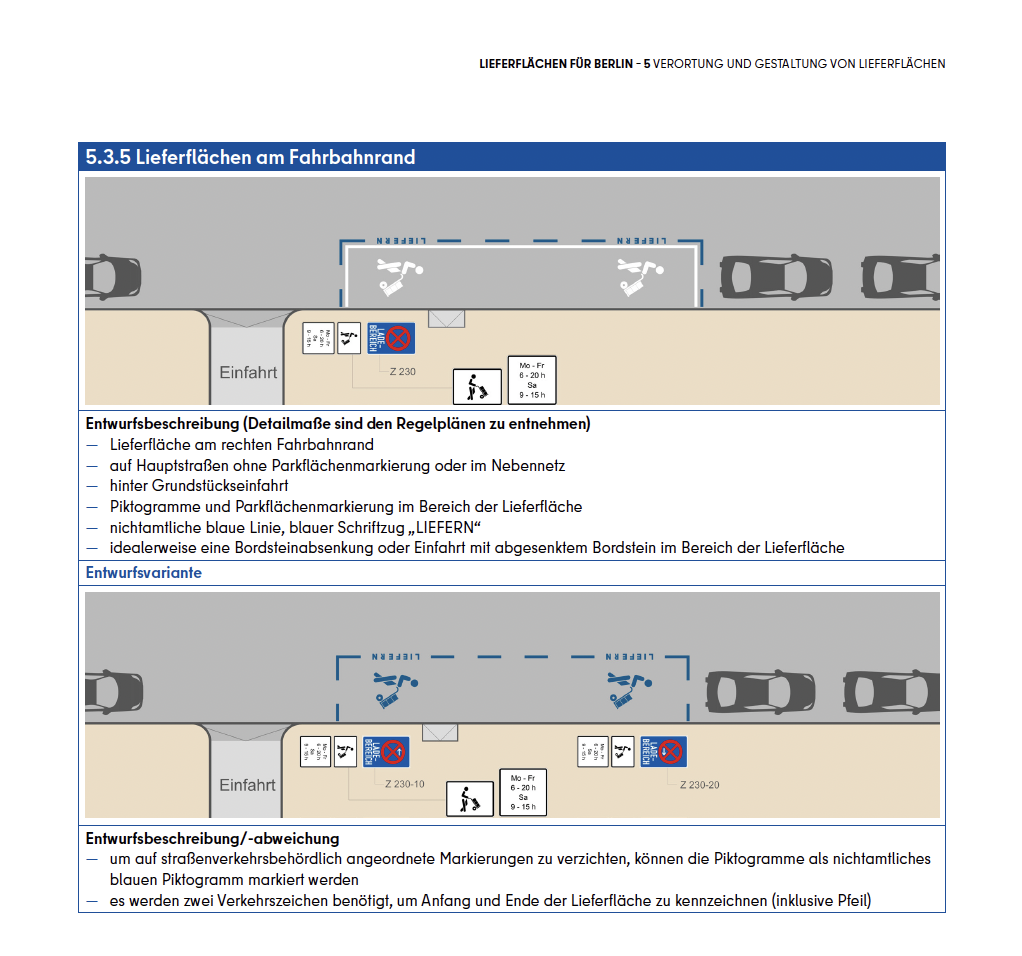
Image credit: Senatsverwaltung für Mobilität, Verkehr, Klimaschutz und Umwelt (2025)
What was learned
Engaging districts from the beginning led to more meaningful, practical guidelines. Their involvement resulted in constructive discussions and strong support for implementation.
Challenges faced:
Implementation varies depending on the district and must be integrated into both new street plans and renovations. Ensuring consistent application across the city remains a key objective.