Prague’s city logistics study

The City of Prague commissioned a city logistics study to better understand freight transport patterns and challenges in the urban environment. The main goal was to identify practical measures to reduce the negative impacts of urban goods delivery – such as congestion, emissions, and conflicts in public space – while improving efficiency, sustainability, and integration of logistics into broader urban mobility planning.
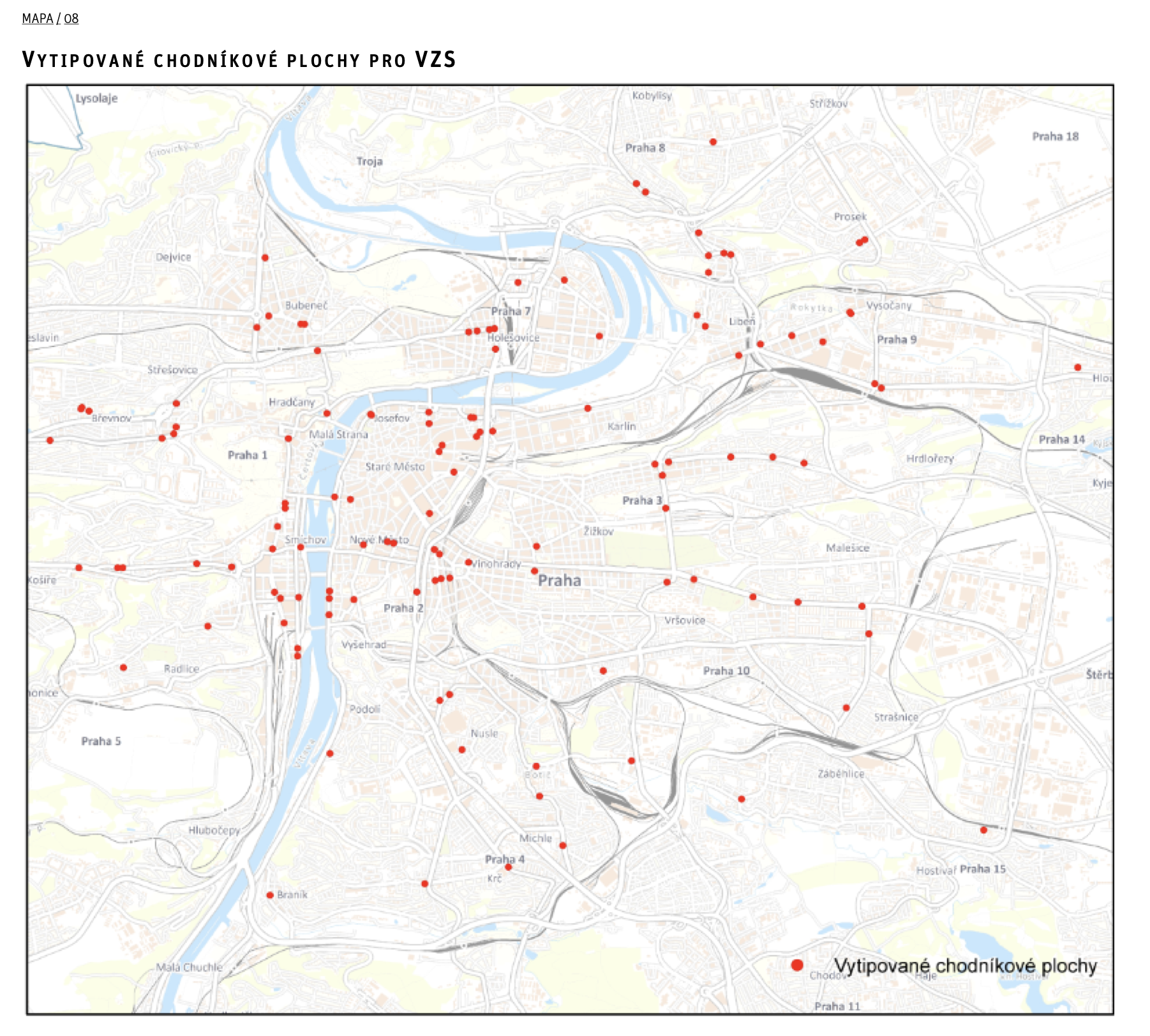
Using specific criteria, this map highlights parking spots ideally suited for conversion into loading zones, directly addressing the shortage of loading areas identified in the report. Image credit: © Institut plánování a rozvoje hlavního města Prahy, 2019
Who it’s for
The initiative targets a broad audience, including local residents and businesses, particularly those in logistics and retail, who benefit from insights into more efficient delivery practices and potential infrastructure improvements. It also supports city planners and public authorities by providing a clearer understanding of freight flows, enabling more informed decisions around urban mobility and the integration of logistics into city planning.
Key stakeholders involved: Institute of Planning and Development (IPR).

Image credit: lightpoet / Adobe Stock
Impact in numbers
The Prague city logistics study provided the city with a foundational understanding of freight transport operations and their impacts on urban mobility. While the study itself did not produce immediate quantifiable outcomes, it identified key problem areas – such as a lack of loading zones, limited data on logistics, and declining conditions for rail freight – and proposed targeted measures to improve efficiency, reduce delivery-related congestion, and promote sustainable modes such as rail, cargo bikes, and water transport. The study highlights the specific gaps that require further research and understanding as well as laying the groundwork future pilot projects, policy development, and investment decisions supporting low-emission and more efficient urban logistics.

Image credit: Natalia / Adobe Stock
What was learned
A key lesson from the Prague city logistics study is the importance of clearly defining data needs early in the process and ensuring their relevancy. The study took two years to complete, and because it was conducted before COVID-19, some stakeholders now question whether the effort was proportionate to the value of the findings, especially given how rapidly the logistics landscape has changed since then. This highlights the need for agile, regularly updated data and planning processes in such a fast-evolving sector.
Challenges faced: Data gathering, data analysis and stakeholder engagement.
More information
https://iprpraha.cz/uploads/assets/dokumenty/2019-05-09_studie_citylogistiky.pdf