Consolidated zero-emission deliveries in Mechelen

In Mechelen, Belgium, the reconstruction of a well-frequented shopping street prompted the city to explore innovative logistics solutions. While the transformation aimed to improve the shopping experience by introducing greenery, climate-adaptive elements, and a car-free layout, the construction works – lasting six months – posed serious challenges for retailers. With access restricted, deliveries to the shops became increasingly difficult, even for cargo bikes.
To address this, the city partnered with BD Logistics to offer an alternative: consolidated, zero-emission last-mile deliveries from a logistics hub located in the northern part of Mechelen. Retailers were encouraged to reroute their deliveries to the hub, where goods were bundled and transported to the shops using emission-free vehicles. This approach minimised disruption, reduced vehicle movements, and introduced retailers to the concept of city-edge consolidation.
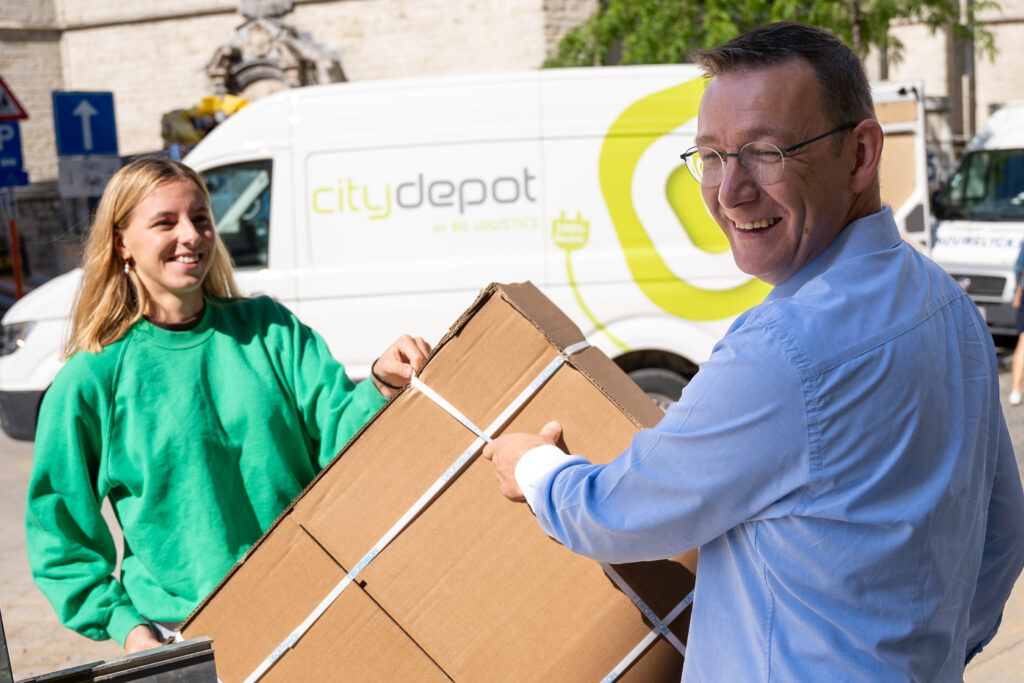
Image credit: City of Mechelen
Who it’s for
The service was aimed at retailers affected by the street’s reconstruction. By centralising deliveries and offering a zero-emission alternative, the city ensured continued operations for shops despite restricted access. Retailers benefited from consolidated deliveries with reduced disruptions, while the city advanced its sustainability goals.
Key stakeholders involved: City of Mechelen (initiator and funder), BD Logistics (logistics partner and hub operator), local retailers.
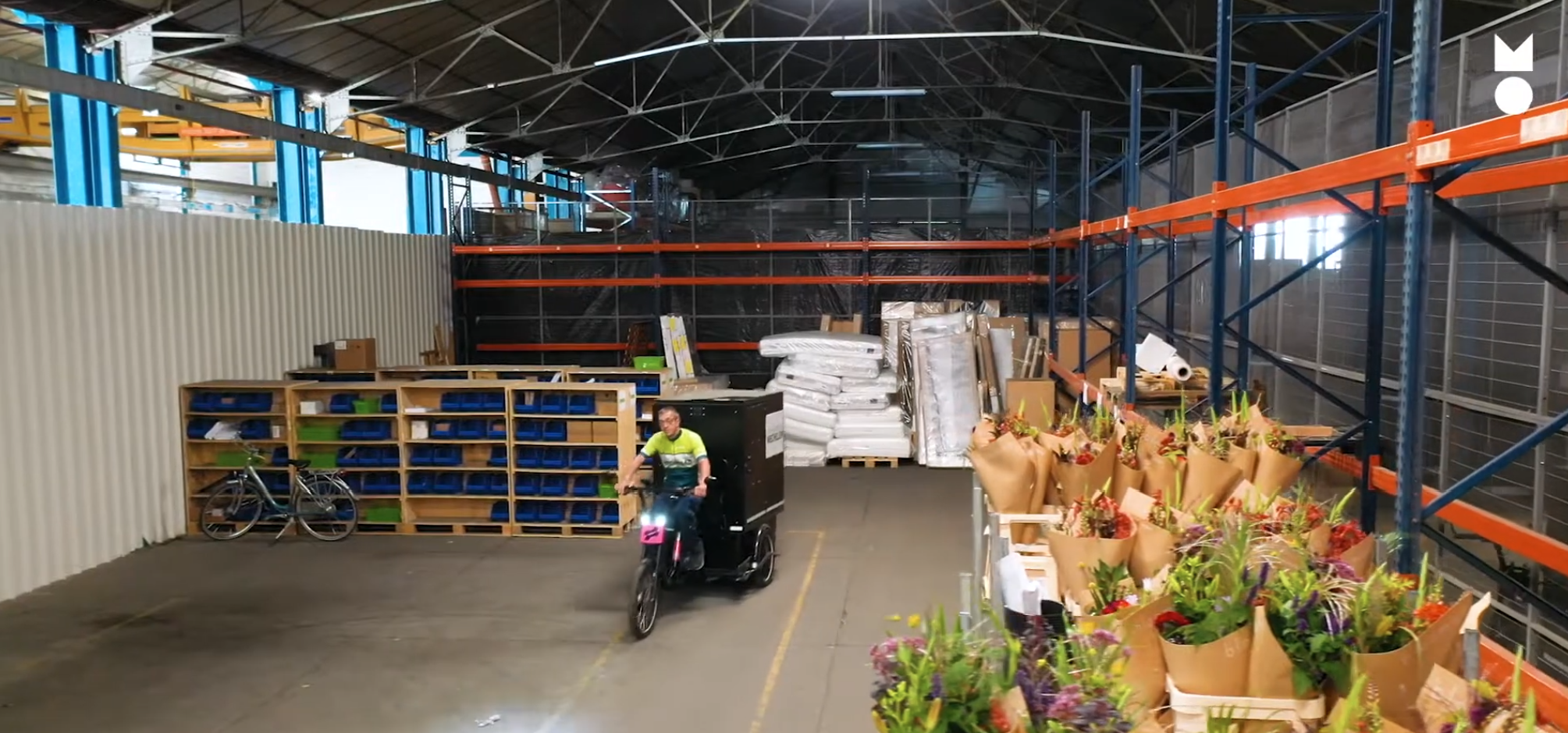
Screenshot (c) StadMechelen / Youtube (2022)
Impact in numbers
FDuring the six-month period of street works:
- 12 retailers participated
- 172 deliveries and 227 collections of paper and cardboard were carried out
- 399 consolidated trips replaced individual runs
- 255 delivery rides into the city were avoided
- An estimated 100 kg of CO₂ emissions were saved
The pilot showed that temporary logistics solutions can both support local business and contribute to environmental targets when implemented with the right partners.
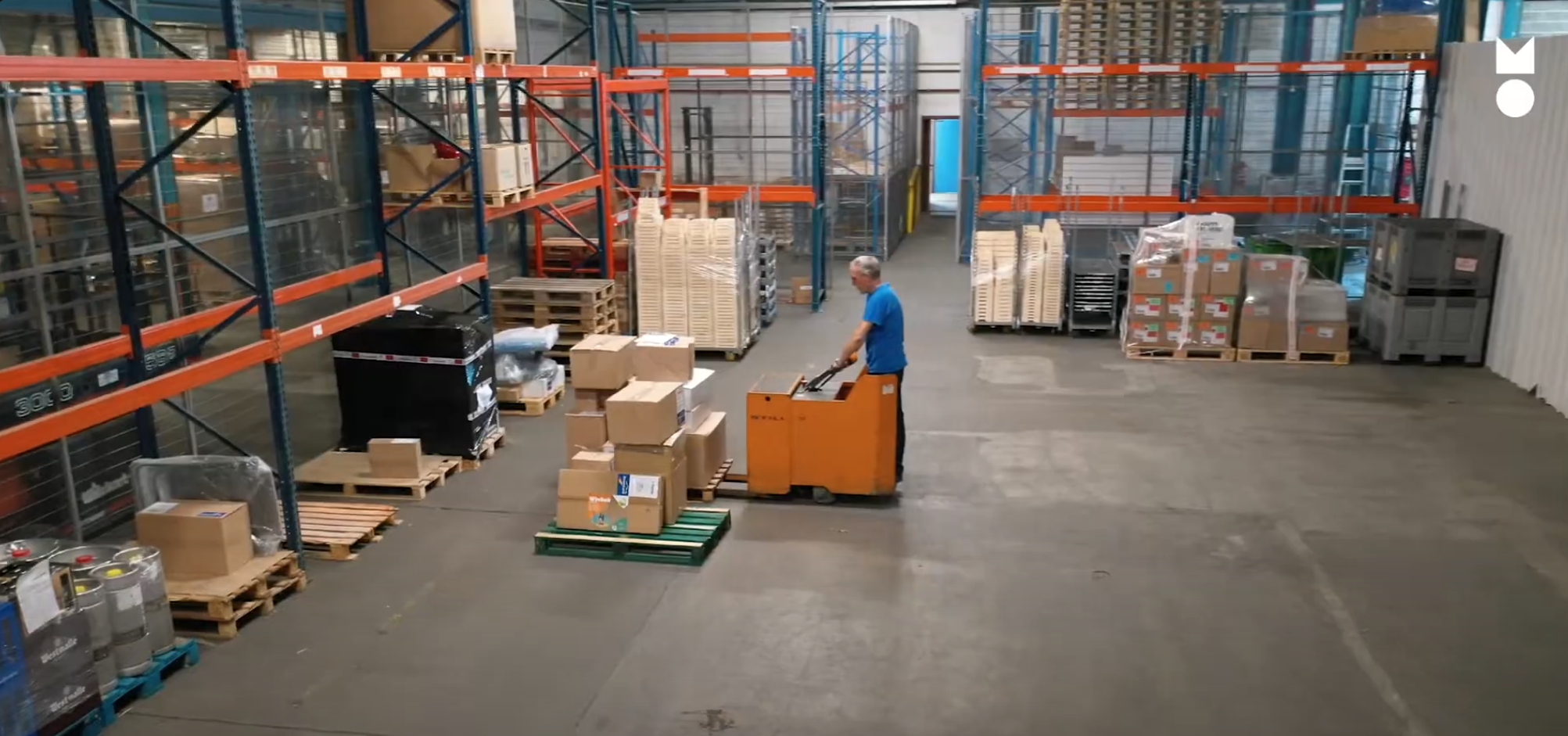
Screenshot (c) StadMechelen / Youtube (2022)
What was learned
The initiative highlighted the importance of strong collaboration between the city, the construction contractor, and the logistics partner. Providing a reliable and simple alternative helped gain retailer buy-in, even among those hesitant to change established delivery routines.
Challenges faced: Convincing retailers to adapt their delivery processes proved difficult. Many were reluctant to alter existing arrangements without clear, tangible benefits.