REPLICATE Smart District: Florence

As Italy’s first lighthouse city in the European REPLICATE project, Florence developed an integrated smart city plan focused on the Cascine/Novoli/Piagge district. This mixed-use area combines residential and tertiary functions with major mobility infrastructure including a highway, airport, and main rail and tram stations. Between 2016 and 2021, Florence piloted a wide set of innovative solutions: from energy efficiency in social housing and advanced smart grids, to e-mobility infrastructure, data-driven services, and a central smart city control room. The goal was to create a scalable smart district model that could be replicated in other European cities.
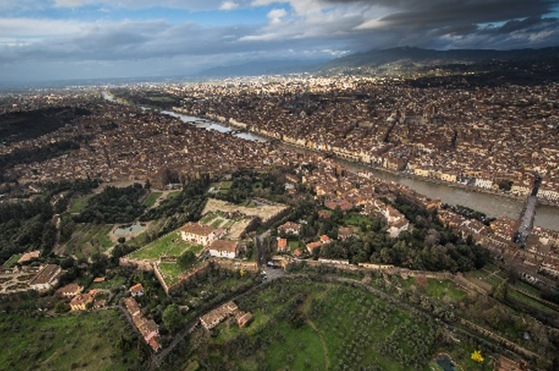
Image credit: City of Florence
Who it’s for
- Residents: 700 people in 300 social housing dwellings benefitting from energy efficiency retrofits and 600 smart info devices.
- City users: up to 550,000 daily users with access to multivendor e-mobility charging stations.
- Taxi drivers: exclusive use of 6 superfast e-charging stations.
- Wider community: 25,000 citizens connected through improved smart grid resilience and services.
Key stakeholders involved:
Municipality of Florence (lead), University of Florence, E-distribuzione, Enel-X, Thales, Spes Consulting, TIM, and a broad local consortium of technology and energy partners.
Image credit: City of Florence
Impact in numbers
Since its launch:
- Energy efficiency: >50% reduction in consumption; 12% beyond expected targets; 320 tCO₂ saved in 2020.
- Smart Grid: reliability improved, with interruptions reduced by –10.93% (SAIFI) and –17.5% (SAIDI+MAIDI).
- Sustainable mobility: over 10,000 superfast taxi recharges per year; 593 MWh/y and 111 tCO₂ saved in 2021; more than 60,000 public recharges over two years with +40 charging stations.
- ICT & infrastructures: annual savings of 346.3 MWh and 176 tCO₂.
Image credit: City of Florence
What was learned
Florence’s REPLICATE project proved that integrated smart district planning can deliver significant efficiency, resilience, and sustainability outcomes. The Covid-19 pandemic caused delays, especially in mobility measures, but also underscored the flexibility of ICT solutions, which were adapted for new uses (e.g. video surveillance, Wi-Fi, city platforms). Public acceptance of green technologies grew markedly, reflecting rising awareness of sustainable living.
Challenges faced:
- Constraints linked to Florence’s cultural heritage and landscape protections limited deployment of smart solutions.
- Rapid evolution of ICT required ongoing system integration to keep pace with emerging models.
- Covid-19 created delays and disrupted full evaluation of some measures.