Supporting city hub activities and bike courier deliveries in Mechelen

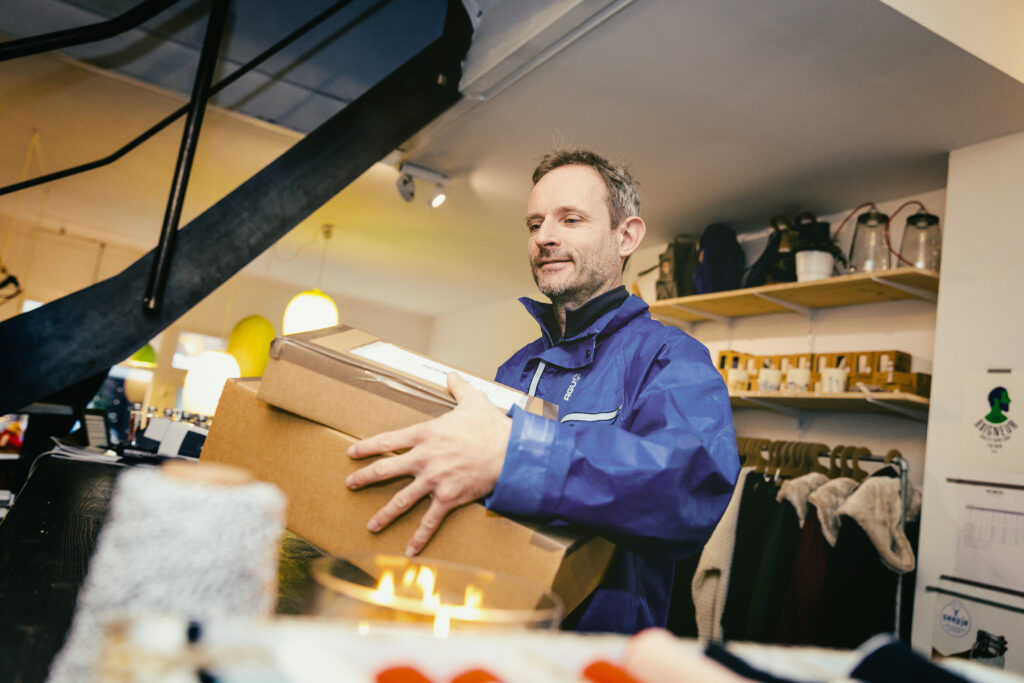
The city of Mechelen, located in the Flanders region of Belgium, is advancing its logistics strategy through the installation of a city hub combined with a local bike courier service. This pilot, operated and owned by ECOkoeriers, Mechelen’s local bike courier company, supports the city’s four core logistics goals: fewer vehicle movements, fewer driven kilometres, lower CO₂ emissions, and improved air quality. The pilot, Logistics unburdening of the shop owner in the city centre, focused on improving delivery processes by consolidating shipments outside the city centre and delivering them by cargo bike.
Screenshot (c) StadMechelen / Youtube (2020)
Who it’s for
This initiative targeted inner-city shop owners, offering them a free and more efficient delivery option. By changing their delivery address to the ECOkoeriers’ hub and receiving consolidated deliveries at agreed times, retailers saved time and reduced disruption, while the city improved the environmental impact of last-mile logistics.
Key stakeholders involved: City of Mechelen (initiator and funder), ECOkoeriers (bike courier and hub operator), REBEL (logistics impact calculator).
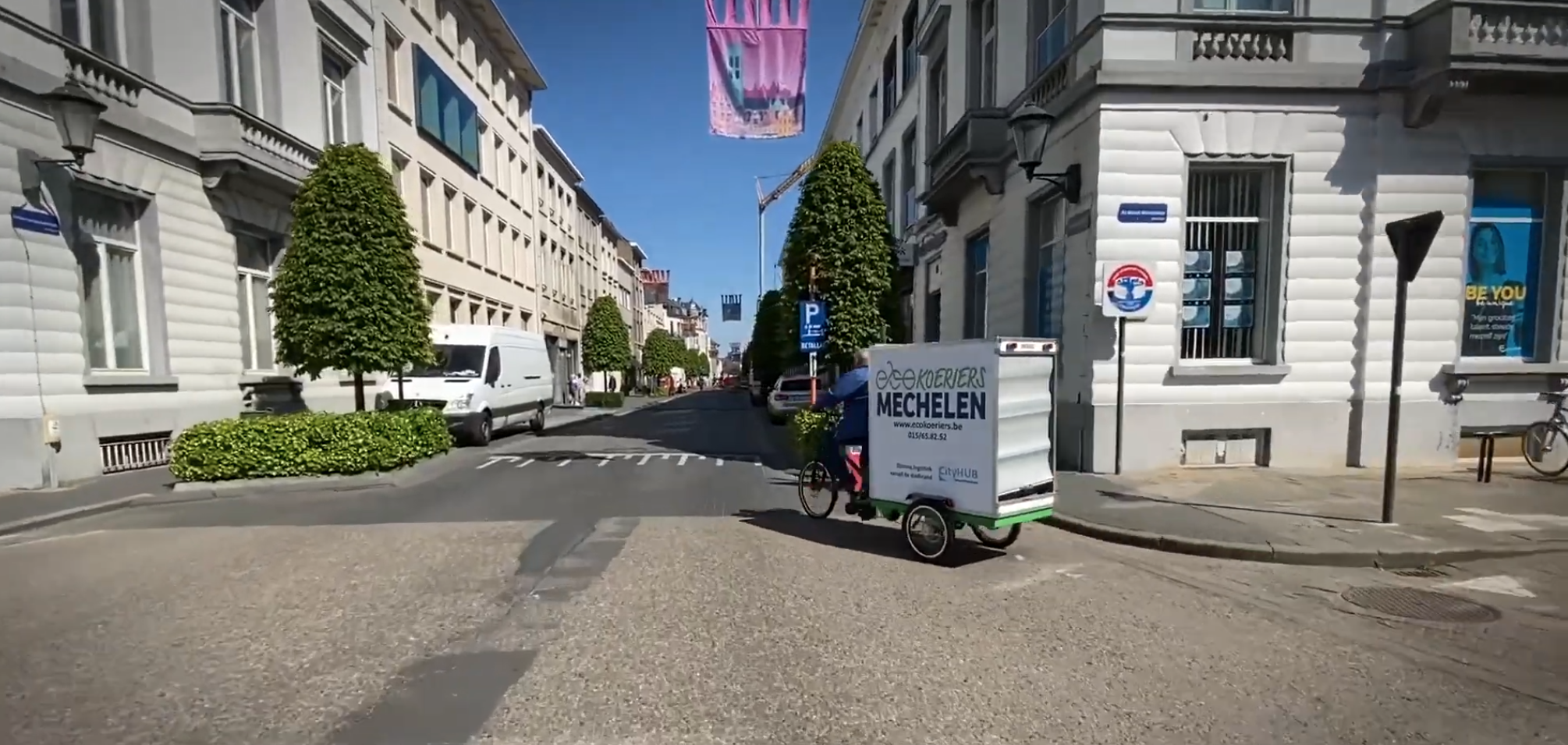
Screenshot (c) StadMechelen / Youtube (2020)
Impact in numbers
Five retailers participated in the pilot. For one of them, over a six-month period, the results included:
- 48 rides covering 288 zero-emission kilometres
- 224 avoided van movements in the inner city
- Approximate cost: €600
- Same-day or next-day delivery
- 3 – 4 shipments consolidated into 1 cargo bike delivery
To assess and communicate these benefits, the city engaged REBEL to develop a logistics calculator, demonstrating the hidden costs of traditional delivery and the value of the new model.
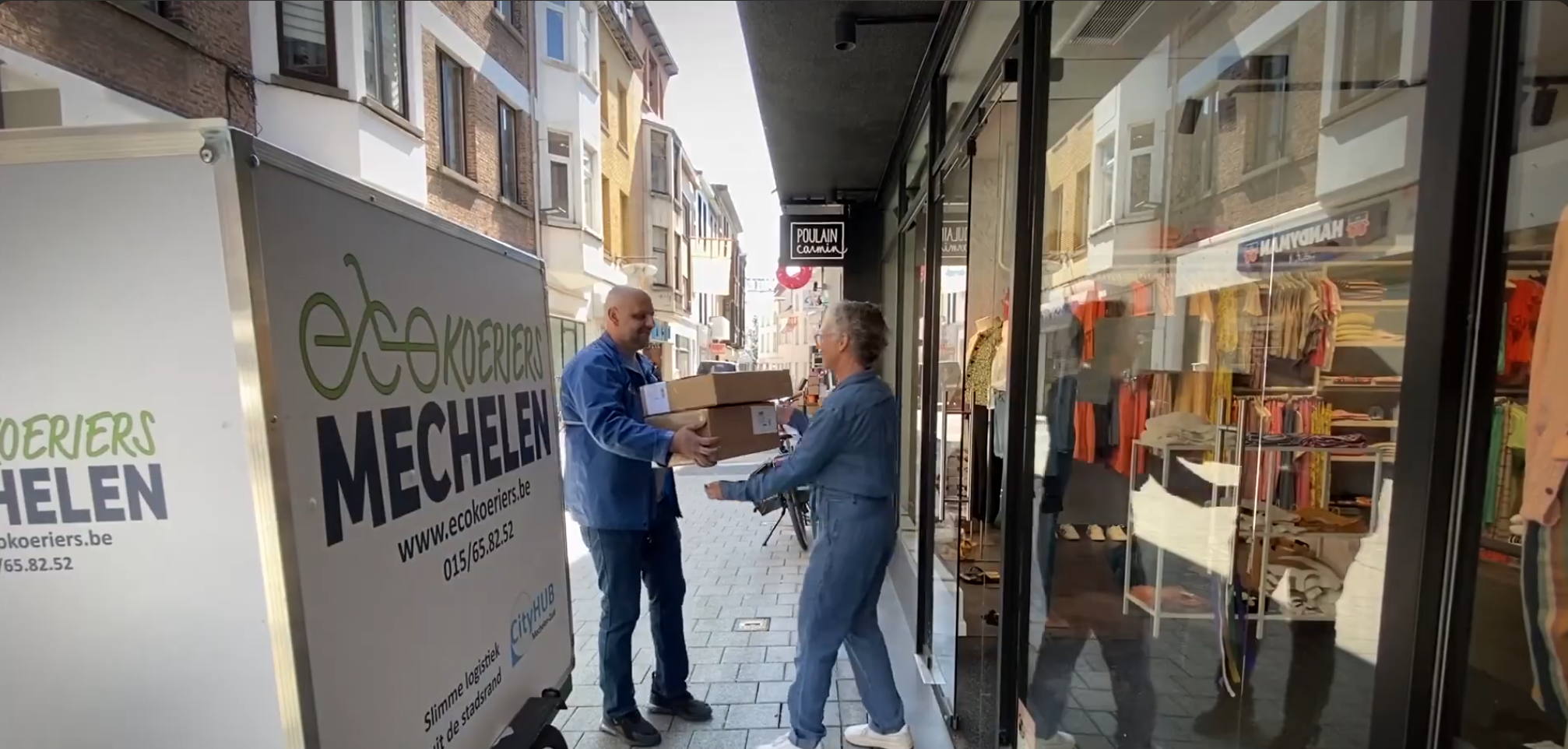
Screenshot (c) StadMechelen / Youtube (2020)
What was learned
The Mechelen pilot is a strong example of how municipalities can support more sustainable urban logistics through collaboration with local operators and targeted support for retailers. The initiative demonstrated that consolidated, bike-based delivery is not only feasible but effective when paired with a well-positioned city hub.
Challenges faced: Encouraging shop owners to change long-established delivery routines was difficult. Many were hesitant to alter processes unless absolutely necessary.