UNCHAIN & MoLo Hubs Joint Final Event was a great success!

Brussels, October 2026
The UNCHAIN & MoLo Hubs Joint Final Event took place on 13-14 October 2026 in Brussels. Titled ‘From Data to Delivery – Integrating Urban Logistics and Mobility for Climate-Neutral Cities’, it explored innovative solutions for sustainable urban logistics in European cities.
The event kicked off with a warm welcome from Project Officers Jesper Jönsson (Interreg North Sea) and Yannick Bousse (CINEA). Jönsson highlighted how the two projects tackle the underrated yet crucial issue of growing urban delivery demand. Taking a broader perspective, Bousse presented the role of urban logistics in the EU Urban Mobility Framework, underlining that EU-funded urban freight and logistics projects, such as UNCHAIN, are fundamental in testing solutions and support more informed urban logistics planning and space management.
Afterwards, Thomas Brauner (Logistics Initiative Hamburg) and Elena García Jiménez (ETRA) explained the impacts of MoLo Hubs and UNCHAIN. MoLo Hubs combined mobility hubs and logistics services to reduce emissions and improve urban life by building better hubs. Showcasing UNCHAIN, García Jiménez first presented the challenge that the project tackled: the rapid growth of e-commerce versus the need to decarbonise transport. Since freight contributes up to 25% of total traffic flow in urban areas, there is an urgent need for zero-emissions logistics solutions. This is where UNCHAIN inserted itself, boosting cooperation between public authorities and logistics stakeholders.
Next up were the presentations from each pilot city of the two projects (Aalborg, Amsterdam, Borås, Hamburg, Mechelen, Berlin, Florence, and Madrid). Mechelen, a pilot city in both projects, leveraged the connection between mobility and logistics to create 7 multimodal hubs (Hoppinpunten) which include parcel lockers and tested different measures to make service logistics in the city centre more sustainable. Berlin‘s Living Lab developed a SULP Monitoring tool and other solutions to optimise traffic conditions. What they learned is to encourage collaboration from the outset, develop hybrid work processes, and be flexible and creative. The Madrid Living Lab was an integrated testbed that connected planning evidence with real-world operational feedback, using data and technology. The Spanish capital tested dynamic curbside, a route-planning app for delivery vans and camera-based monitoring of logistics spaces, revealing both the technical potential and the institutional conditions needed for implementation. Finally, Florence tested various monitoring and planning tools covering SUMPs and SULPs, UVARs, on-street loading zones, dynamic curbside management, and much more, highlighting that collaboration, data, infrastructure, and interoperability are the keys to success.
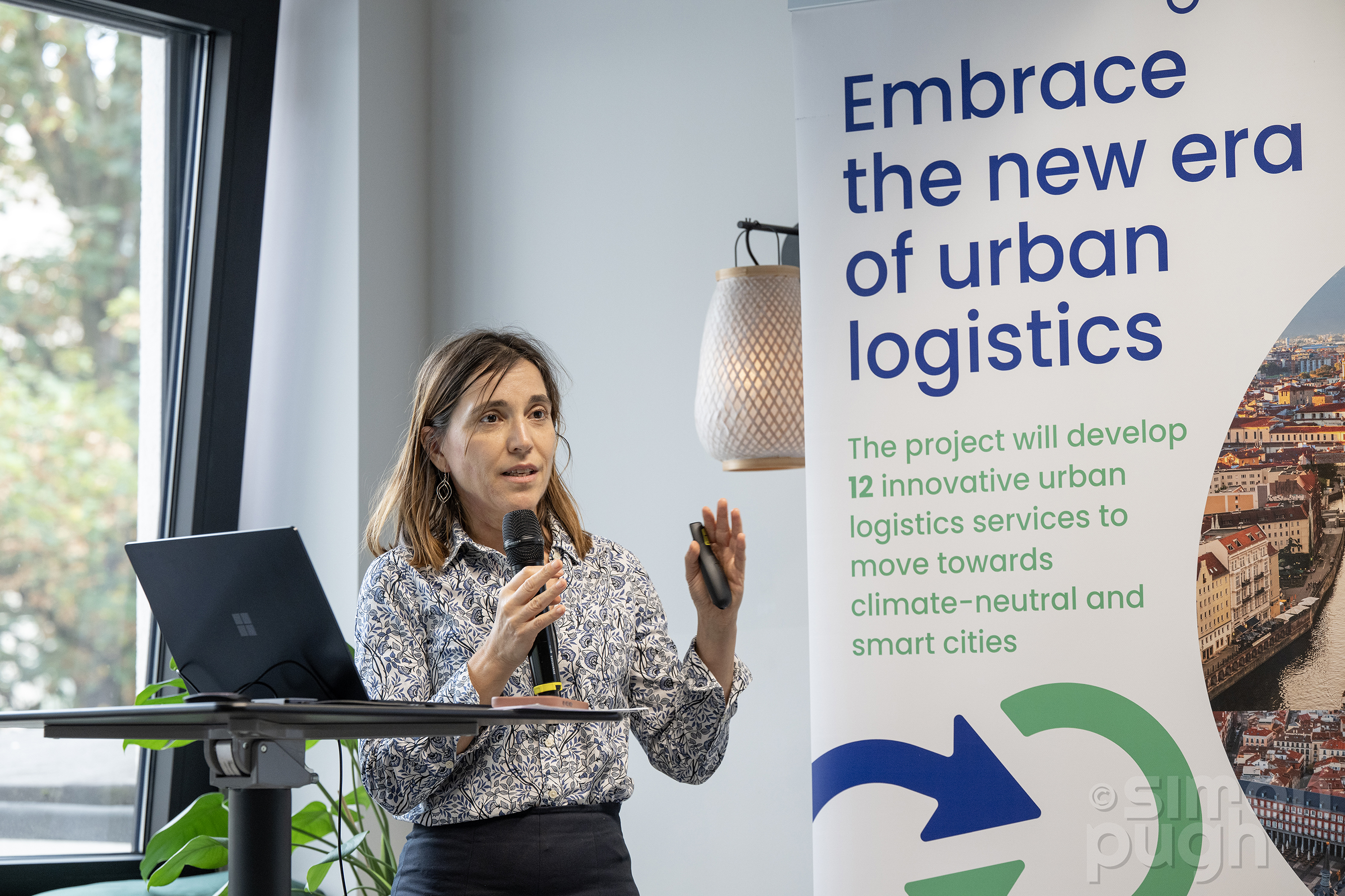
The afternoon continued with two parallel sessions exploring the UNCHAIN and MoLo Hubs solutions. Session 1A ‘Urban Logistics Hubs in Action – Designing, Governing and Operating Hubs’, was moderated by Julia Amaral (University of Antwerp) and Fadwa Kassem (HiiCCE). Saba Schramko (Amsterdam University of Applied Sciences) presented the results of the MoLo Hubs pilot in Amsterdam, underlining how mobility hubs should be based on functional, locational, and cross-sectoral synergy. Then, María Gutiérrez (DHL) showcased logistics and last-mile distribution solutions developed by DHL in Madrid, while Marzia Picciano (UPS) presented how UPS cooperated with UNCHAIN to test a mini-hub for last-mile delivery via cargo bike in Florence.
In the meantime, session 1B ‘Data-sharing, Trust & Digital Tools as Enablers for Urban Logistics & Hubs’, moderated by Claudia Pandolfo (ENGINEERING – INGEGNERIA INFORMATICA SPA/ENG), explored data-driven solutions. Nico Keinath (City of Berlin) presented the Active UVARs and city regulations tools, the UCC location and integrated planning Kit, CargoConnect, and the On-street loading zones planning tool. Jana Červeňáková (City of Prague) showcased the Prague pilot and the testing of the ETRA e-ink sign on a lighting pole for dynamic curbside management. Carsten Rømming (City of Aalborg) explained how Aalborg used data to understand citizens’ behaviour in using smart lockers. Jānis Andiņš (City of Riga) talked about how Riga developed a mobility data ecosystem to integrate mobility, traffic, and logistics data, understand travel patterns, and develop mobility modelling and analytics tools. Lastly, Anders Nilsen (City of Bergen) delved into using digital regulation as a framework to create more dynamic use of public space.
The first day ended with a networking reception during which participants had the occasion to connect and continue the interesting discussions that emerged throughout the day.
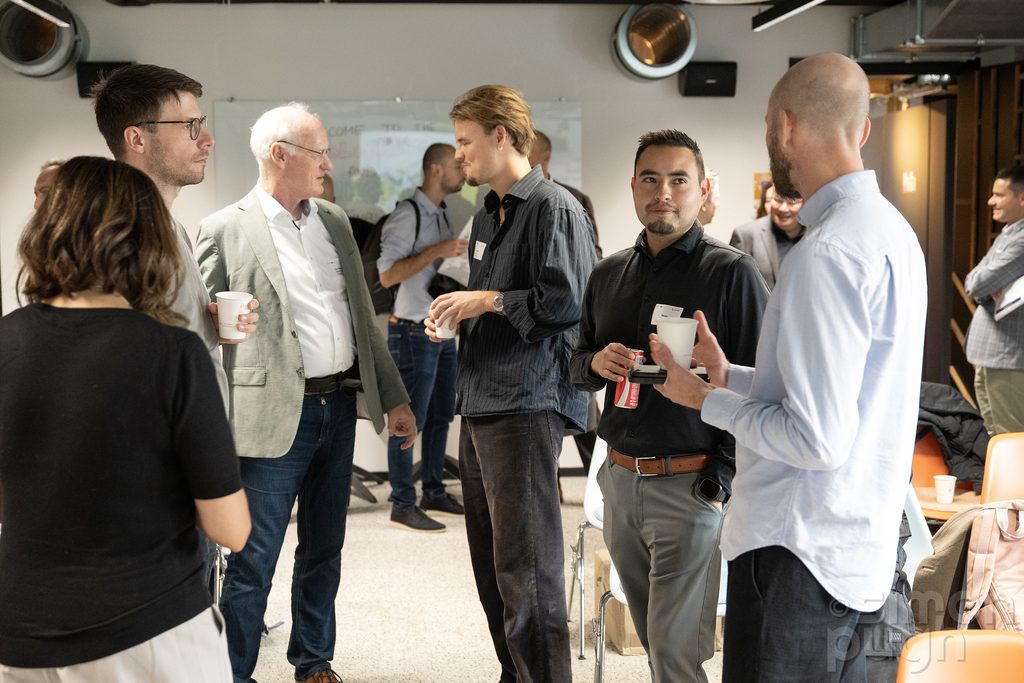
Day 2 started with a second round of parallel sessions. Session 2A, ‘Turning Challenges into Opportunities in Innovative European Projects‘, moderated by Esmée Hof (City of Mechelen), dived into the experiences of the pilot cities and the lessons learnt. Frank Ebbink (City of Amsterdam) introduced the parking and multimodality challenges in Amsterdam and the challenge of shifting the perception of residents. Jonas Widerström (City of Borås) walked participants through the testing of a physical hub for reuse, collection, sorting, and parcel services, which met several barriers in terms of financing, organisation, ownership and user behaviour. Finally, Lena Menges (VMZ Berlin) highlighted how, in the Berlin Living Lab experience, the main takeaway was that flexibility is crucial: keep the objective clear and fixed, but adapt the process.
In parallel, session 2B, ‘How to Get Started – Key Learnings from MoLoHubs Solutions & UNCHAIN Services’, was moderated by Konstantinos Zografos (Heriot-Watt University) and explored service logistics. Chiara Tavella (SPES Consulting) gave an in-depth overview of the market and exploitation analysis and the SULP definition of the UNCHAIN Living Lab in Florence. Building on this, Monica Castañeda (EIT-Urban Mobility) presented the transferability and replicability of the UNCHAIN experiences and introduced the upcoming UNCHAIN Transferability guidelines. Britta Peters (HiiCCE) introduced the ‘Building Better Hubs’ practical guide for cities and regions developed by the MoLo Hubs project, a valuable tool gathering all the key lessons from the pilot testing. Daniel Herrera (POLIS) concluded with the governance challenges and recommendations.
Afterwards, the plenary session ‘Policy, Governance & the Way Forward – How do Hubs & Innovative Urban Logistics become a Success?’ took place. Moderated by Raffaele Vergnani (POLIS), the session featured mobility experts to address the opportunities and challenges of sustainable urban logistics. Willem van Heijningen (City of Amsterdam & Member of the Expert Group on Urban Mobility for the EU) placed the Amsterdam experience in advancing sustainable urban logistics in the broader European context. Professor Joris Beckers (University of Antwerp) brought the academic perspective to the discussion, highlighting the importance of research. Eugenia Martínez (City of Madrid) and Alessandra Barbieri (City of Florence) reiterated the perspective of cities and the growing importance of the logistics topic. Finally, Gregory Perez (Bpost) underlined how the collaboration with industry is crucial in finding scalable solutions.
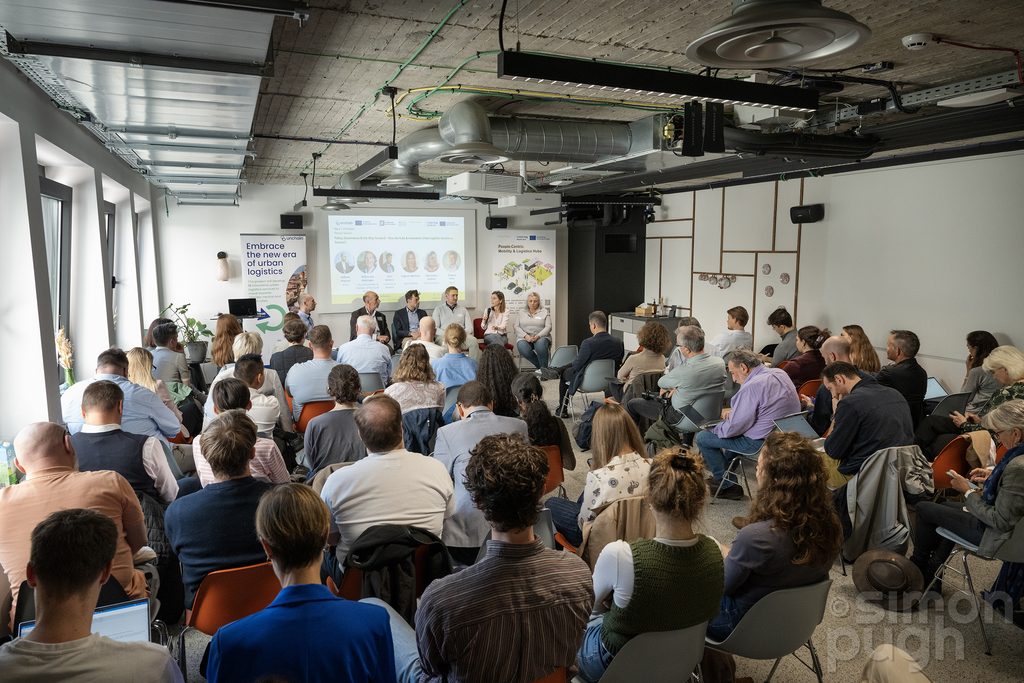
The event concluded with a warm thank you by the project coordinators Elena García Jiménez (ETRA) and Thomas Brauner (Logistics Initiative Hamburg), who highlighted how pilots are crucial to adapt solutions for each local context and that solid collaboration is the key to turn pilots into permanent actions supported by the communities.
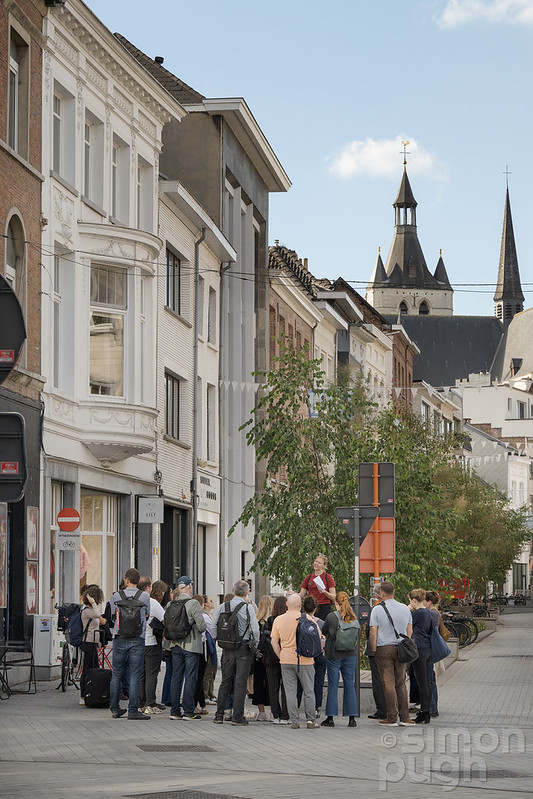
In the afternoon, participants headed to Mechelen for a site visit guided by Esmée Hof. She showed the results of the MoLo Hubs and UNCHAIN projests and how the city is moving forward with the solutions initiated, explaining the challenges such as service logistics in the historical centre, combinining mobility and logistics hub in he Hoppin points, and how collaboration with the providers such as Bpost is supporting more sustainable and better delivery services.
The two days were filled with interesting conversations and valuable exchanges, with over 80 people taking part in the event. All of this was possible thanks to the solid collaboration between the projects and their partners.
MoLo Hubs & UNCHAIN Final Event – Credits: Simon Pugh